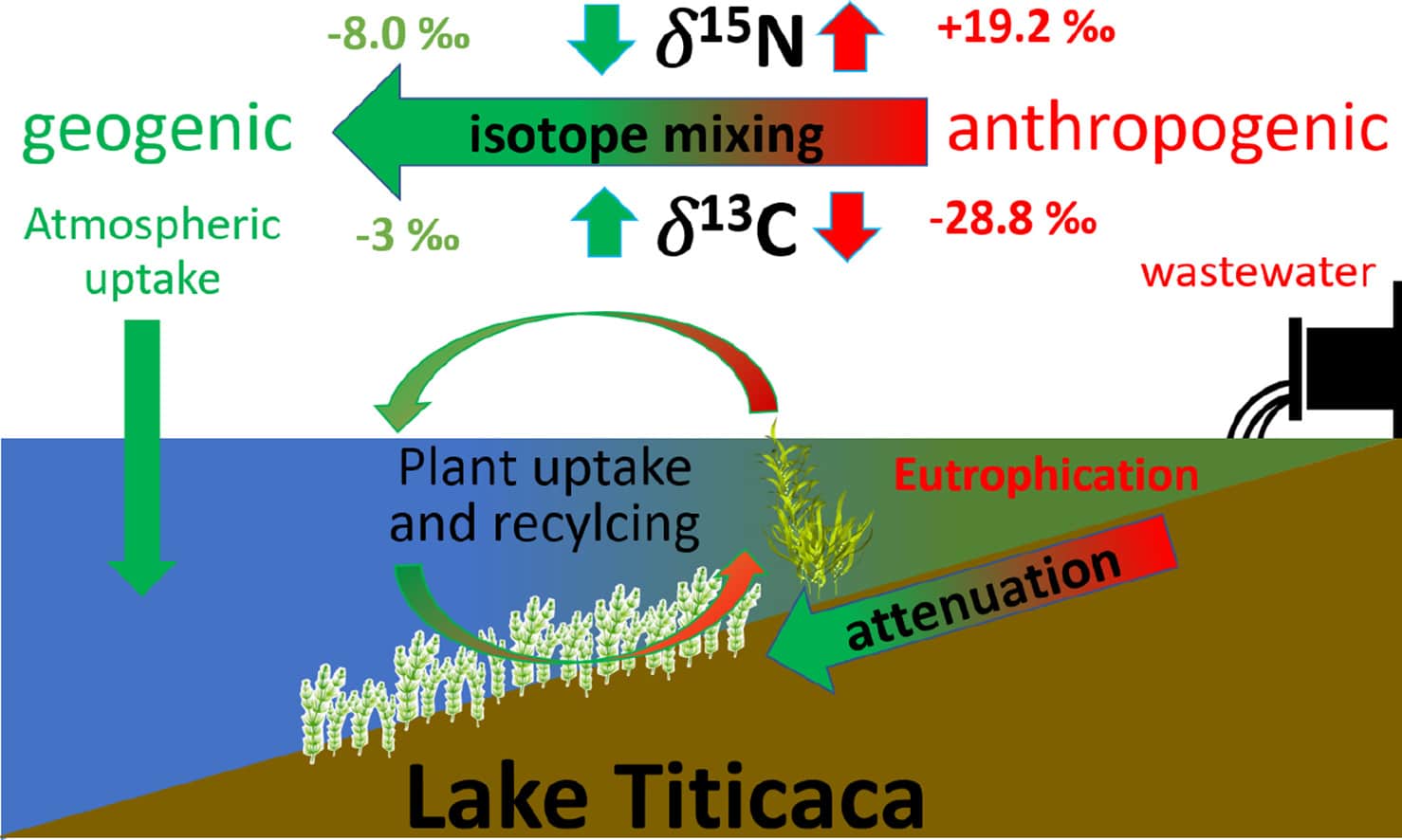
 Highlights C and N stable isotopes were measured in four compartments of Lake Titicaca.Anthropogenic discharge affects baseline C and N isotope signatures.C recycling from soil, anthropogenic and lacustrine sources affect the δ13C signature.δ15N signatures track...
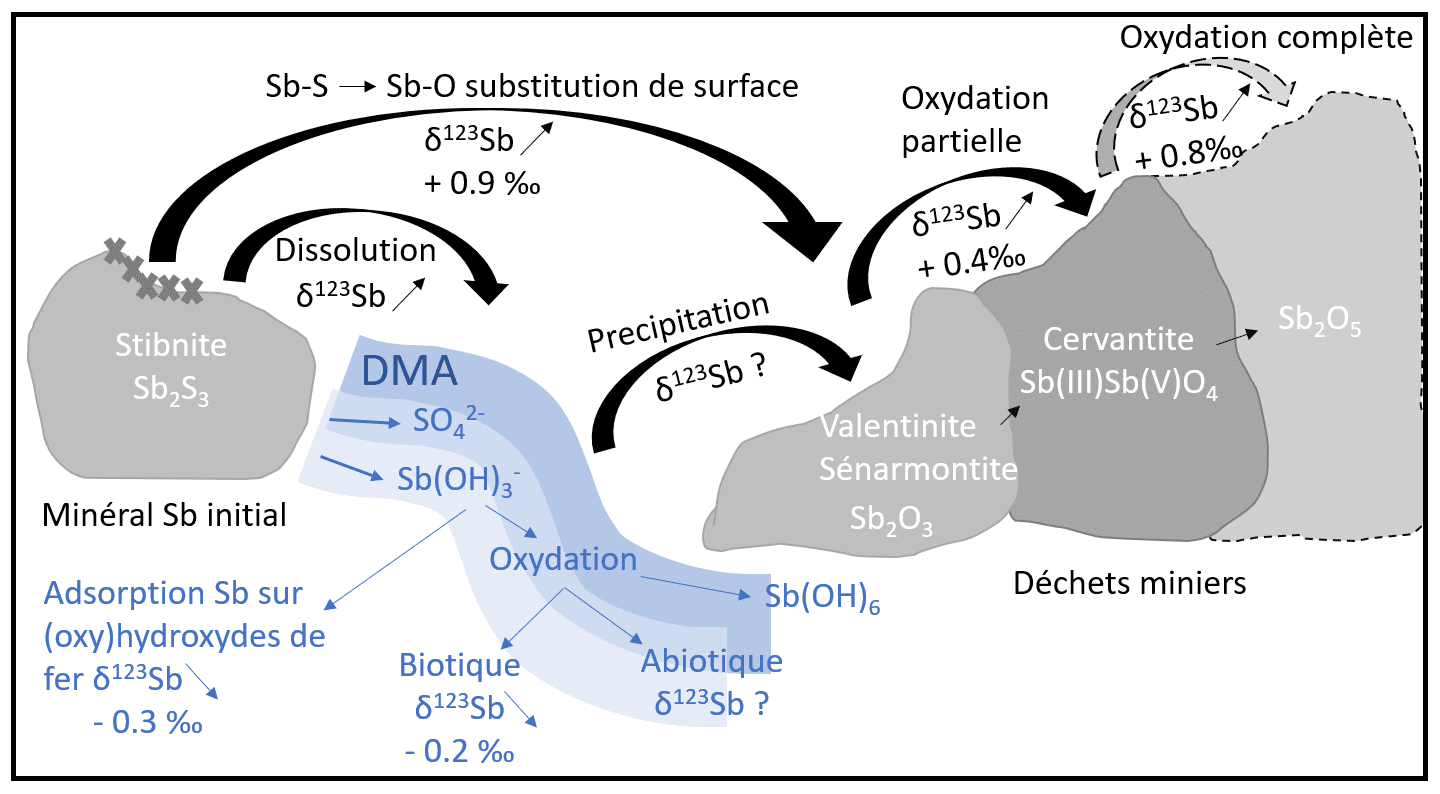 Abstract Antimony (Sb) is an emerging priority pollutant in the environment and a potentially carcinogenicelement. The general objective of this thesis is to contribute to exploring the potential of stableisotopes of antimony (121Sb/123Sb) to trace sources and...
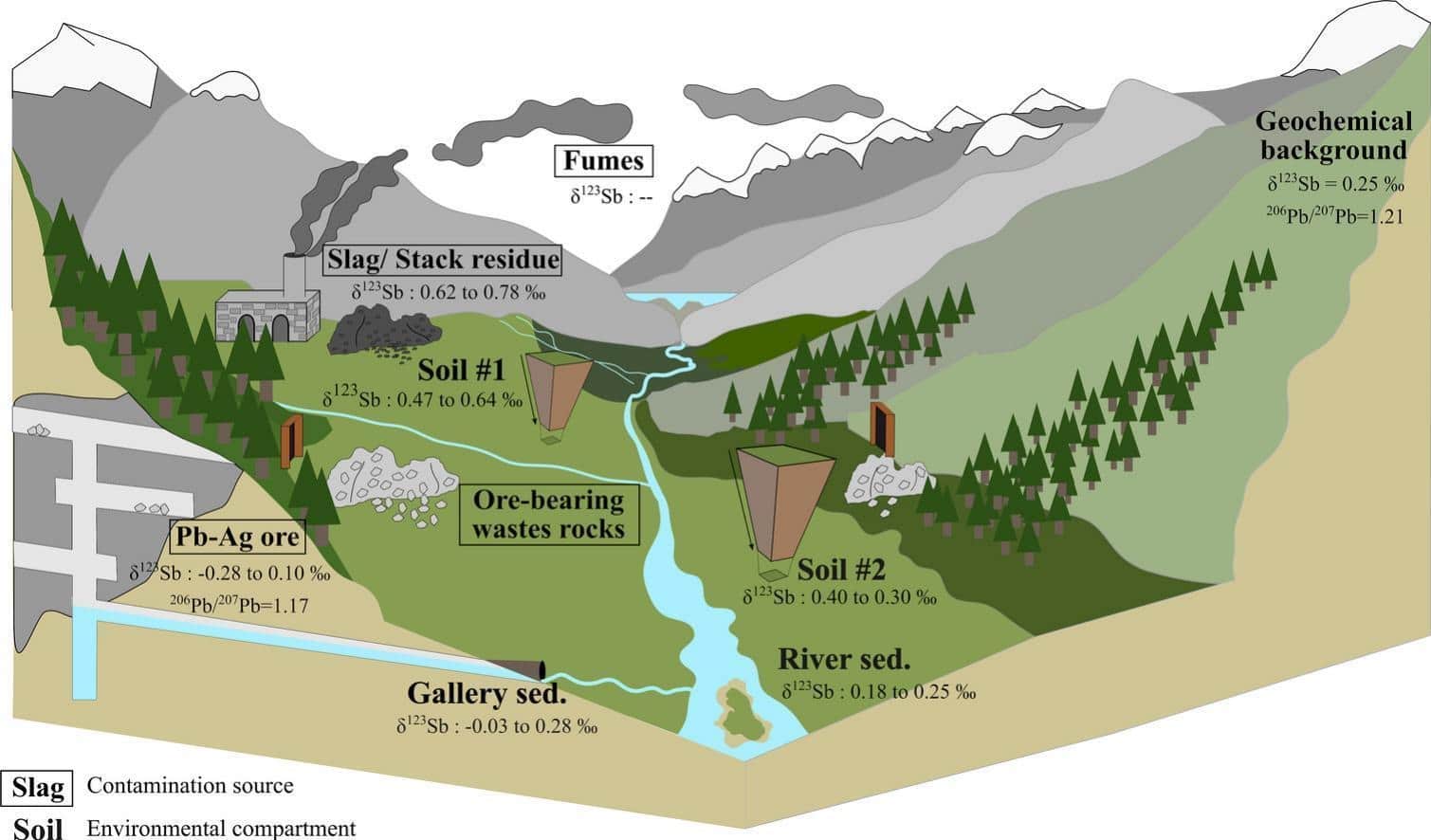 Highlights Soils are locally affected by extreme Pb and moderate Sb contamination.Anthropogenic soil contamination is restricted to the surface horizons.Antimony isotopes allowed to discriminate Sb from mining vs metallurgical sources.Pb-Sb isotope coupling is a...
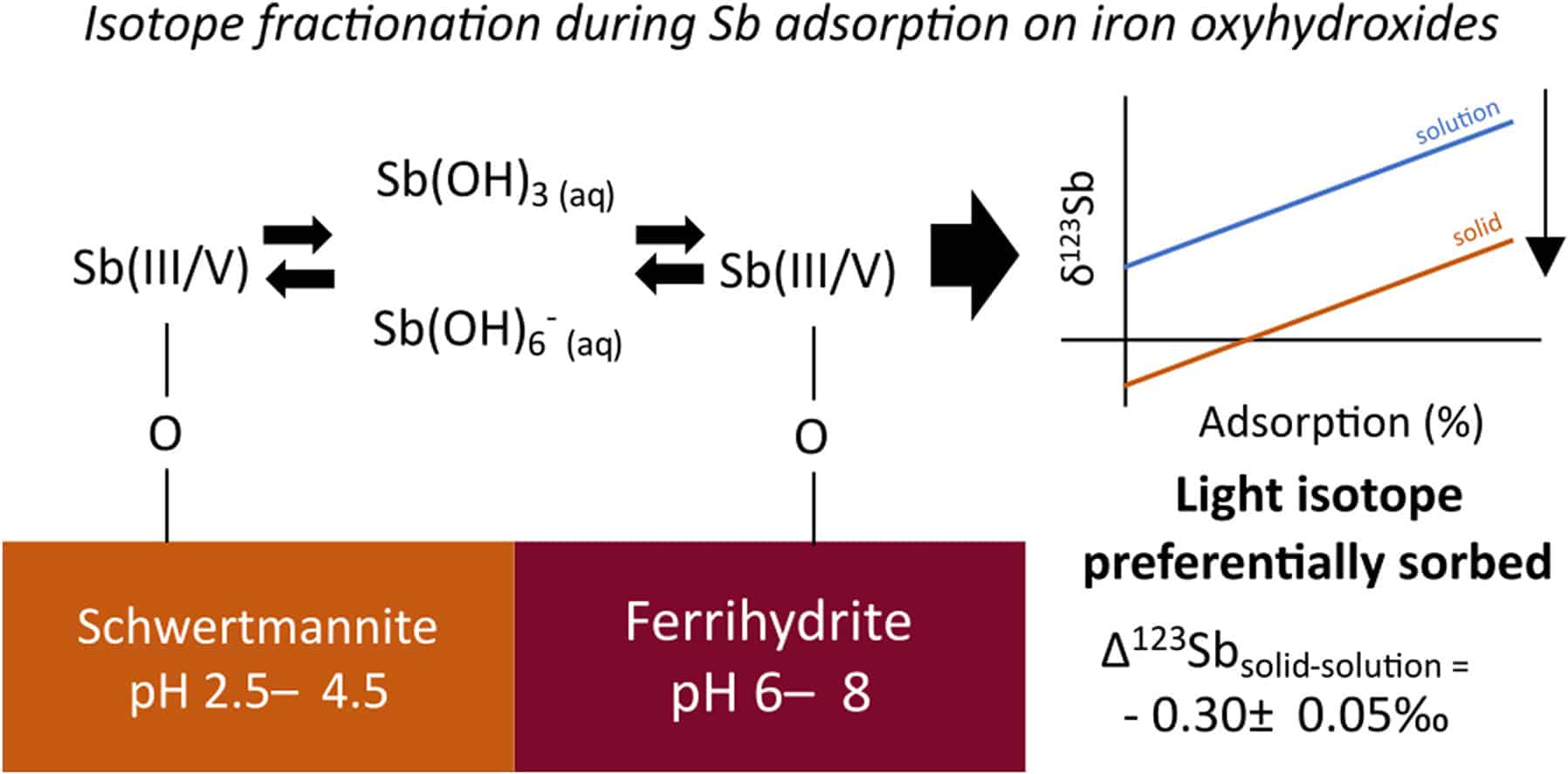 Highlights Experimental study of Sb isotope fractionation during its sorption on iron minerals.Light isotope of Sb was preferentially adsorbed on schwertmannite and ferrihydrite.Equilibrium fractionation factor (Δ123Sbsolid-solution) between −0.36 ‰ and −0.25 ‰....
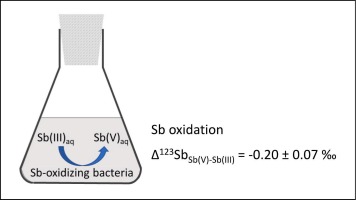 Highlights Antimony isotope fractionation during oxidation documented for the first time.Biotic and chemical oxidation fractionated Sb isotopes in opposite direction.Multi-step reactions underlie the fractionation process. Abstract Oxidation of antimonite (Sb(III)) to...