Thursday, 2 April, 2026

Isotopic Fractionations
IsoFind Nexus is IsoFind's advanced analysis module. It allows you to explicitly model the geochemical processes that generate isotopic signatures, link them to their physicochemical context, and compare the results against data in the database. This page presents the foundations of the module and the logic of fractionations. The following pages describe each component in detail.
What the Nexus Is
An isotopic signal is never interpreted in isolation. It depends on the geochemical process or processes that produced it: kinetic fractionation, thermodynamic equilibrium, adsorption on mineral phases, evaporation, dissolution. It also depends on the chemical context in which these processes occurred: pH, redox state, speciation of elements in solution, temperature.
The Nexus is the IsoFind module that structures this interpretation. It does not generate automatic conclusions. It provides a framework in which every hypothesis is explicit, every parameter is documented, and every step of the reasoning is traceable.
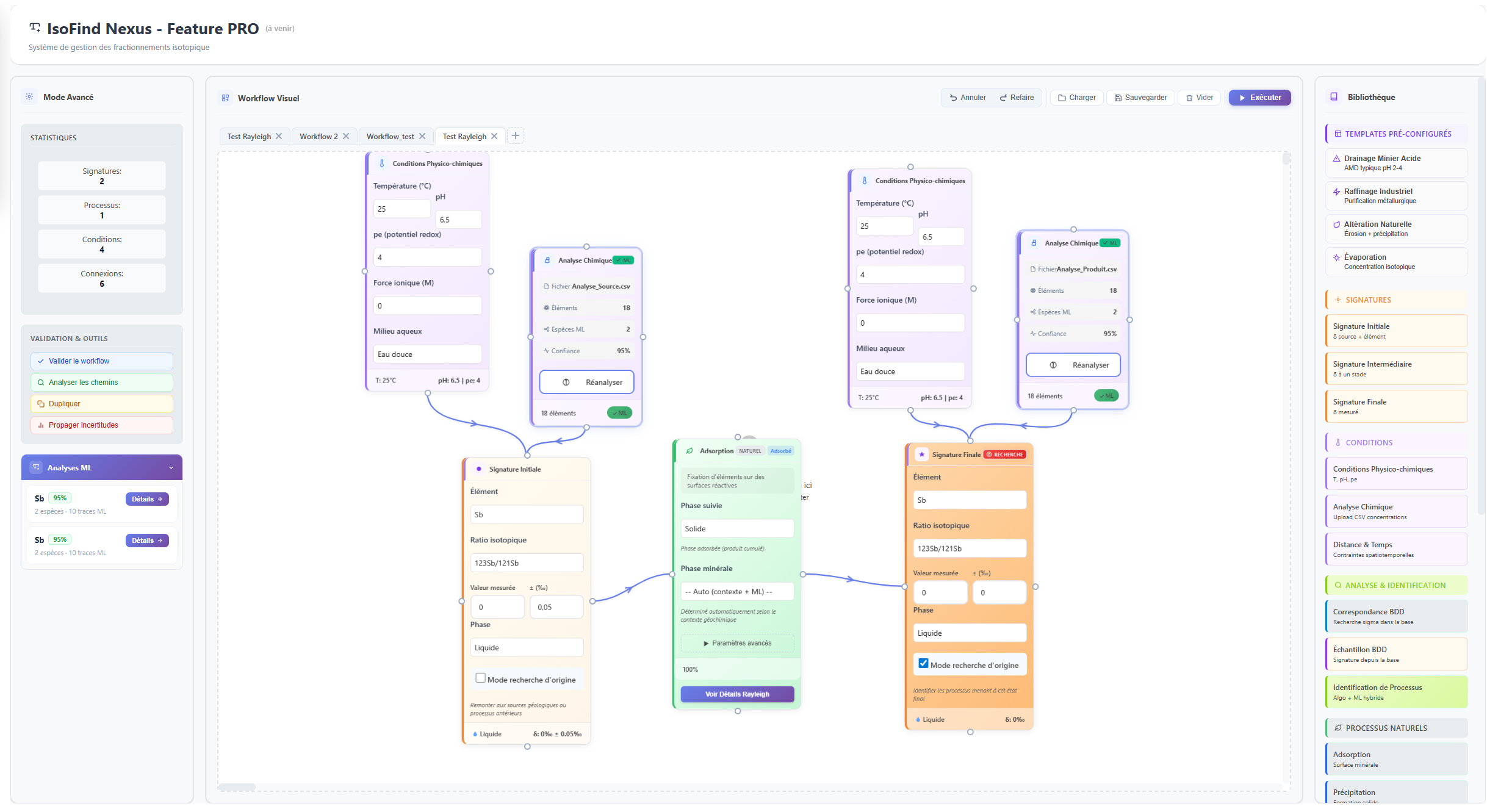 Figure 1: Main Nexus interface with the workflow canvas and process panel.
Concretely, the Nexus links the following elements in a single environment, which geochemists previously handled separately:
| Component | Role in the Nexus |
|---|---|
| Isotopic signatures | Starting point and end point of each workflow. δ value, uncertainty, phase, matrix. |
| Geochemical processes | Cards representing explicit physicochemical transformations with their parameters. |
| Chemical conditions | pH, pe, temperature, ionic strength, medium. The context in which processes operate. |
| Speciation | Distribution of species in solution, dominant redox states, confidence levels. |
| Fractionation models | Explicit Rayleigh and kinetic calculations with mass balance verification. |
| ML contextualisation | Statistical context provided by models trained on 1.7 million geochemical data points. |
| IsoFind database | Comparison of modelled signatures against real analytical data stored in the project. |
Isotopic Fractionation in the Nexus
Isotopic fractionation refers to any modification of the isotopic composition of an element during a physical, chemical or biological process. The Nexus models two major families of fractionation.
Rayleigh fractionation
The Rayleigh model applies to closed systems in which the product is progressively removed from the source phase as the reaction proceeds. It is particularly relevant for modelling evaporation, fractional crystallisation, or the progressive precipitation of a mineral phase.
In the Nexus, each Rayleigh-type process card explicitly exposes the following parameters: the fractionation factor α (or ε in per mil notation), the reacted fraction f, the δ value of the residual reservoir, the δ value of the instantaneous product, and the δ value of the cumulative product. The mass balance is verified at each step of the workflow.
Kinetic fractionation
Kinetic fractionation occurs when the reaction is incomplete or irreversible, typically during rapid evaporation, diffusion, or non-equilibrium precipitation. The Nexus parameterises these processes with kinetic coefficients distinct from the thermodynamic equilibrium coefficient, allowing the modelling of isotopic signatures that are enriched or depleted relative to what an equilibrium approach would predict.
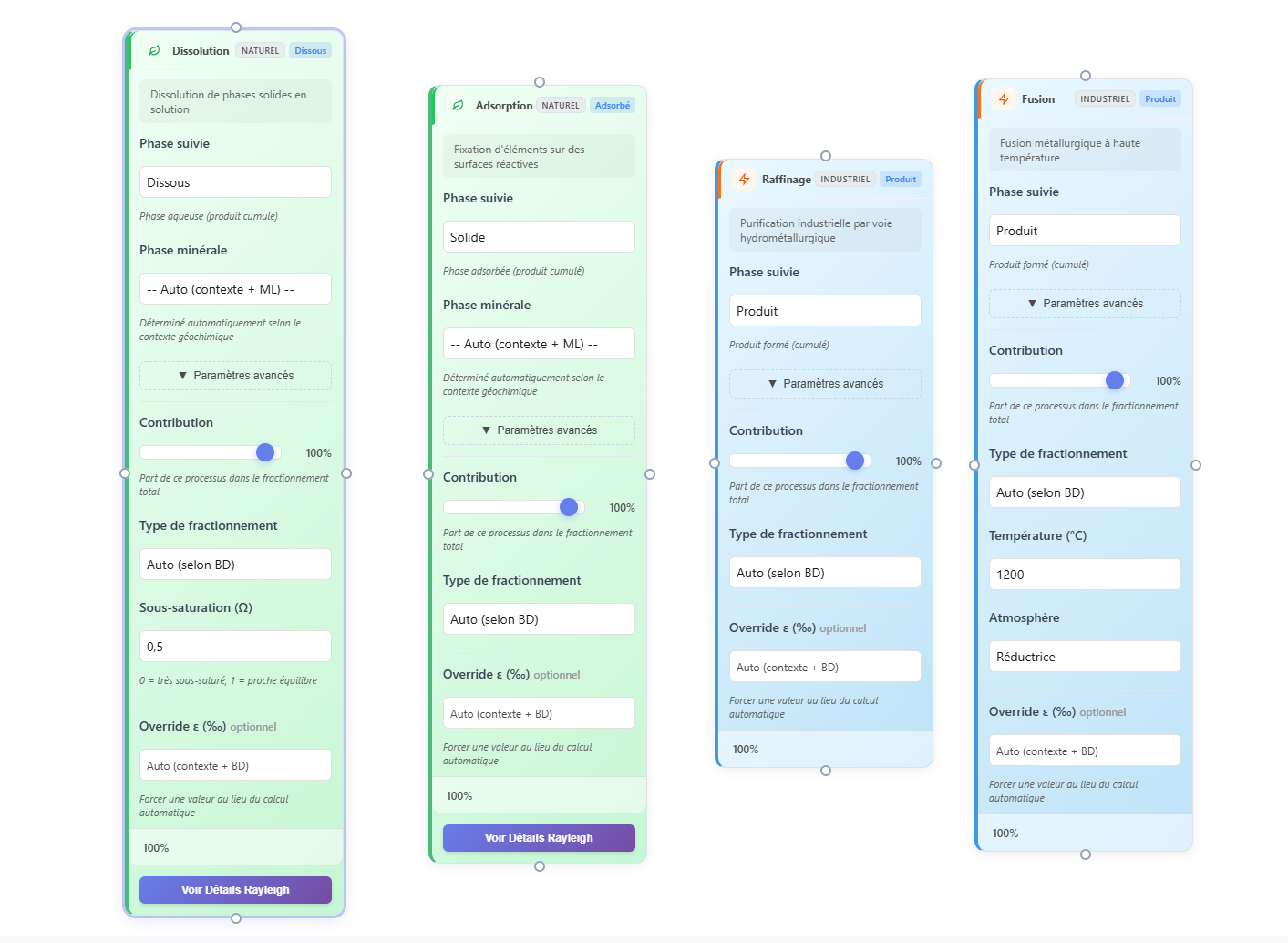 Figure 2: Process cards with their explicit fractionation parameters.
Process Cards
The Nexus canvas is a work surface on which cards representing each stage of a geochemical scenario are assembled. Each card corresponds to a process type and exposes the parameters specific to that process.
| Category | Available process types |
|---|---|
| Natural processes | Weathering, oxidation, reduction, precipitation, dissolution, adsorption, desorption, complexation, evaporation, diffusion, redox. |
| Industrial processes | Smelting, refining, leaching, electrolysis, centrifugation, distillation. |
| Isotopic signatures | Initial signature card (source) and final signature card (target). Each card carries a δ value, an uncertainty and a phase. |
| Chemical conditions | Conditions card defining the medium: pH, pe, temperature, ionic strength. |
| Analysis | Analysis card triggering the fractionation calculation and comparison against real data. |
| Temporal constraints | Card for associating a duration with a kinetic process. |
Cards connect to each other via directional arrows on the canvas. The order of connections defines the sequence of the geochemical scenario. A workflow can include parallel paths to model simultaneous processes on different phases.
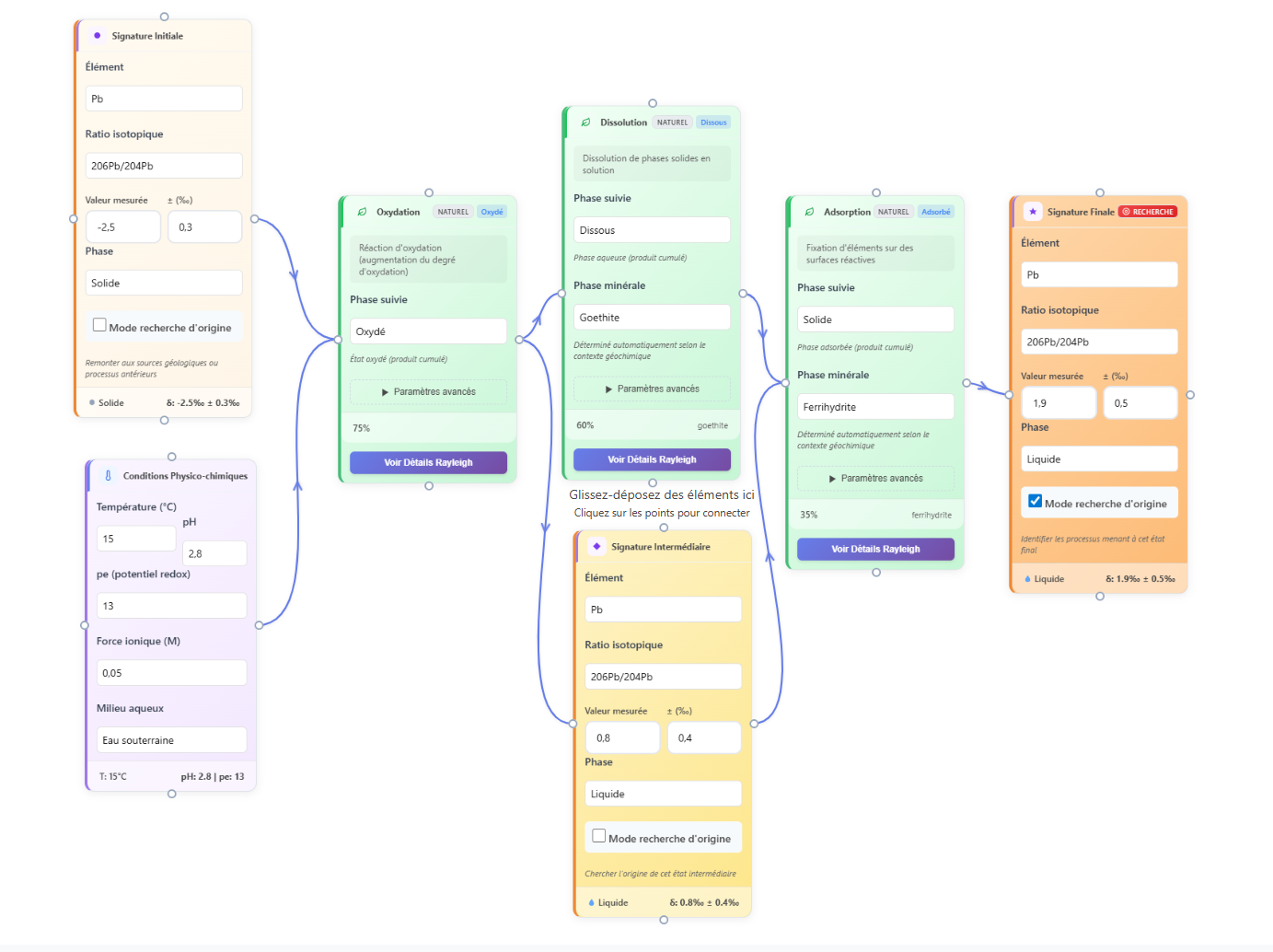 Figure 3: Example workflow modelling acid mine drainage with two transfer pathways.
Speciation and Geochemical Context
Speciation is integrated directly into the Nexus via a dedicated panel. For a given element and set of conditions, the speciation panel displays the distribution of species in solution, the dominant oxidation states and their respective proportions, along with a confidence level associated with the calculations.
This information is essential for interpretation: two apparently identical precipitation processes can produce very different isotopic signatures depending on whether the element is predominantly in Sb(III) or Sb(V) form, for example. The Nexus makes this dependency explicit and links it directly to the fractionation parameters of the relevant cards.
Linking a conditions card to a process before triggering the analysis allows the calculation engine to adjust fractionation coefficients based on the actual redox context, rather than using generic values from the literature.
Contextualisation by ML Models
The Nexus integrates contextualisation models trained on 1.7 million geochemical data points. These models intervene after the explicit physicochemical calculations: they do not replace the equations, they provide a statistical context that allows the results to be situated relative to what is observed in comparable geochemical situations.
An important point about their role: these models make no decisions on behalf of the user. Their output is a context, not a conclusion. The final interpretation always rests on the explicit physicochemical models, the documented equations, the traceable parameters and the bibliographic references associated with each process.
Every Nexus calculation is traced. Every bibliographic source associated with a process is identifiable. No result is produced without the underlying assumptions being exposed. This principle of transparency is what distinguishes the Nexus from a black-box approach.
Preconfigured Templates
To facilitate onboarding, the Nexus offers four preconfigured geochemical templates accessible from the Nexus menu. Each illustrates a realistic scenario with coherent geochemical parameters.
| Template | Modelled scenario |
|---|---|
| Acid mine drainage | Pyrite oxidation in an acid medium (pH 2–4, high pe), dissolution, adsorption on ferrihydrite, Sb/Fe enrichment. |
| Industrial refining | Oxidative smelting at 1200°C, acid leaching, selective precipitation, electrodeposition. Heavy isotopic enrichment in the output. |
| Natural weathering | Dissolution of a granitic rock in an acid medium, organic complexation, adsorption on kaolinite, calcite precipitation in a neutral zone. |
| Evaporation | Initial meteoric water on the SMOW scale, two successive kinetic Rayleigh steps with temporal constraints, halite precipitation, residual brine. |
Templates are a starting point, not a result. Once loaded, each template can be freely modified: adding processes, changing parameters, connecting to real project data. It is advisable to start with a template close to your use case before building a fully custom workflow.
What This Page Does Not Cover
This page presents the general principles of the Nexus and the logic of fractionations. The following pages in this section detail each component in operational terms.
The Add/Edit Processes page explains how to create, configure and connect cards on the canvas. The ML/Contextualisation page describes how the contextualisation models work and how to interpret their outputs. The Workflow page covers tab management, saving and the .isofind exchange format. The Fractionation Databases page presents the available coefficient repositories. The Interpreting the Nexus page guides the reading of results and methodological scoring.