From instrumental measurement to forensic software: IsoFind is the project of an isotope geochemistry researcher who decided to build the tools he was missing. Offline-first architecture, native cryptography, zero cloud dependency.
IsoFind bridges analytical expertise, software development, and a philosophy of digital sovereignty around a single object: isotopic data.
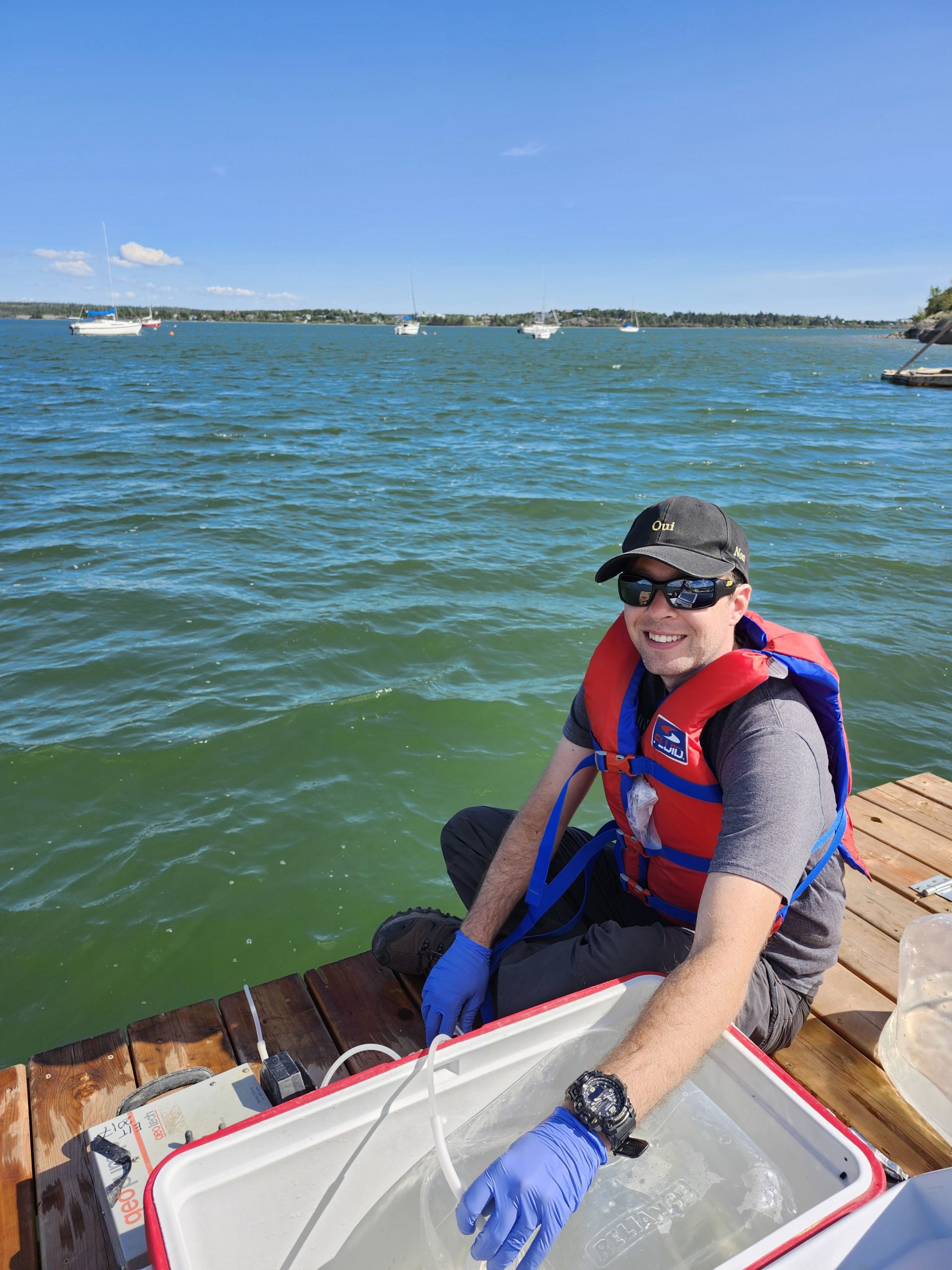
PhD in experimental geochemistry focusing on stable antimony isotopes. Extensive experience with MC-ICP-MS and Orbitrap instrumentation. Mining, industrial, and environmental fieldwork across Europe, North America, and South America. Identification of geographical origin for sensitive materials through multi-isotopic fingerprinting.
Sole developer of the IsoFind ecosystem: desktop application (Tauri/Rust and FastAPI),
machine learning models trained on 1.7 million geochemical data points, the ISOF exchange
format with ECDSA signatures, and IGL, an open language for modelling
isotopic processes whose specification is published separately from the software.
On PyPI: pip install isof and pip install igl-lang.
Offline-first architecture designed for sensitive environments: no cloud dependencies, no trackers, no telemetry. Native Zero-Trust and Zero-Knowledge protocols. Air-gap compatible. Data integrity verifiable via cryptography without the need for a trusted third party.
“Identifying material origin through isotopic fingerprinting, and building the tools to do it at scale.”
PhD in experimental isotope geochemistry, specializing in trace element isotopes (Sb, Pb, As) and their forensic applications. Postdoctoral fellowship at the University of Waterloo on mine remediation; fieldwork experience in France, Canada, Bolivia, Lebanon, and the Philippines.
Alongside the scientific work, sole developer of the IsoFind ecosystem since 2024. The approach is that of open science: whatever carries the data is published separately from the software and under an open licence, so that a result stays readable, verifiable and replayable without it. The ISOF exchange format and its Python implementation are MIT licensed, the IGL language specification is under CC BY 4.0, and the IGDB fractionation factor database requires a citation on every numerical value. Joint invention disclosure with the University of Montpellier.
Released in 2026, IGL is a textual language for modelling isotopic processes, designed to stay readable, versionable and independent of the software that runs it, following the model set by PHREEQC in aqueous geochemistry. Two independently written engines now pass the same conformance suite: the only proof that a specification can genuinely be reimplemented by a third party.
The community databases of samples, certified reference materials and analytical methods follow the same logic: voluntary contribution, attribution to authors, citation of the source publication, and no transfer of intellectual property.
Languages: Fluent in French and English, proficient in Spanish.
The methods implemented in IsoFind stem from research published and validated by the international scientific community.
Scientific collaborations, defense and critical industry applications, or integrating the ISOF format into your analytical workflows: get in touch directly.